The Pikmin sequels shouldn’t exist
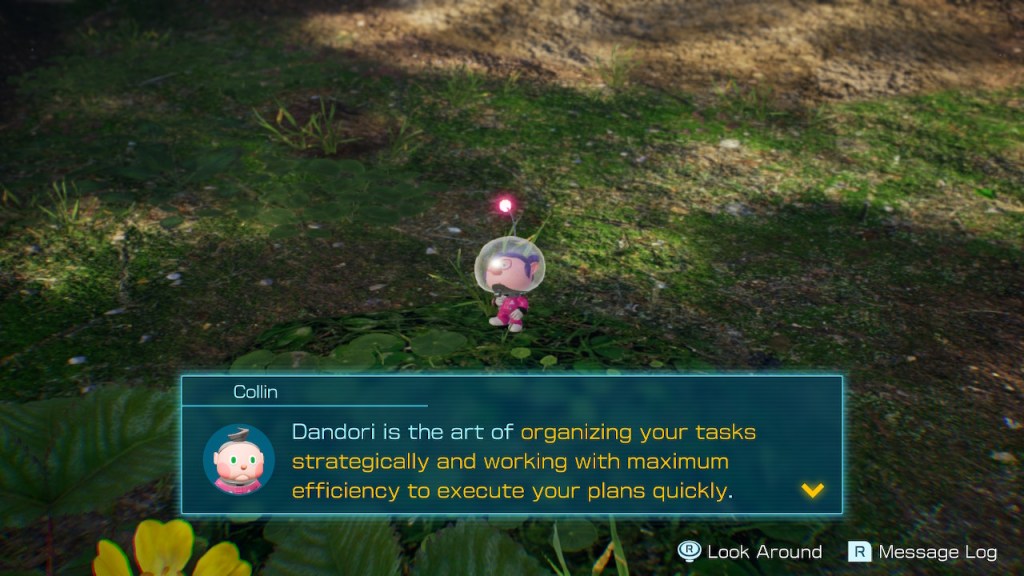
The Pikmin 4 demo says: “Dandori is the art of organizing your tasks strategically and working with maximum efficiency to execute your plans quickly.” It goes on, in a practically boomer-ish-ly reactionary tone, “Its practice has fallen by the wayside in recent years…” And a loading screen tip drills it in, bursting past the fourth wall, “Try to practice it in everyday life!” At the same time, by returning to Pikmin 2’s choice to eliminate the timer that looms threateningly over your whole playthrough of Pikmin 1 (and, to a lesser extent, Pikmin 3), Pikmin 4 doles out no particular punishment for not being efficient at all. At first all this might seem paradoxical. Yet it makes sense if you simply think of it as taking for granted that you will be efficient just for the sake of it. And this is exactly how people play the average videogame with resource management components produced by and for capitalism to represent its values. These games let you minmax everything if you like, only at the expense of the one resource that matters, which must be sacrificed to the numbers in the game: your real-life time.
You can find plenty of people who will say they dislike the original Pikmin’s timer, and if it’s because you find it too stressful, maybe you already agree with its critique and don’t actually need to play the game. But I suspect the reason why it inspires not just dislike but an intense resentment in some is precisely what it lays bare about all the time they give up to meaningless, repetitive processes, whether in their leisure or their work, in game loops or tedious tasks. The game that makes you be efficient, Pikmin 1, is ultimately the only one asking you: how would you really like to be spending your time? And going further: how often does a society founded so thoroughly on efficient exploitation of natural resources and workers even offer the opportunity to pose that question to ourselves? To get to these questions, it relies on putting you through an uncomfortable experience, which has no reason to be repeated, and whose attempted repetition only engages in the overproduction that it criticizes. You could hardly produce any sequel at all to such a darkly concise game without contradicting it.
 The Game Manifesto