by Joel Jordon
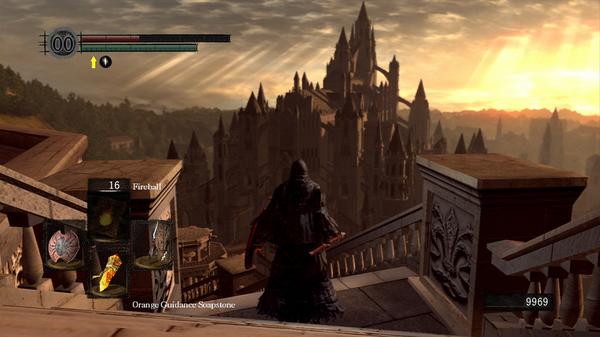
Dark Souls is keen on ensnaring the player in its many environmental traps. In one area, after the player goes carelessly to grab some treasure, the floor gives out and drops him or her down to not just a pit but a pit within a pit that contains poisonous water and a number of many-eyed squid creatures. Because the poisonous water not only poisons the player but also slows his or her movement down drastically, these squids’ attacks are very difficult to avoid, and one of their attacks involves spraying acid that actually breaks the player’s equipped weapons and armor, making them useless until repaired. If the player still manages to kill these enemies somehow, he or she is nonetheless stuck wandering while poisoned in this pit within a pit and will find only what appear to be two more pits—these ones bottomless—and no escape. These two pits turn out to have thin areas on the sides of them that can be walked along, and the walls that appear to be directly behind them turn out to be set slightly back to make room for hallways that open up to ascending stairways, but by the time the player discovers these, the game has already thoroughly proven the environment is in control here.
by Joel Jordon
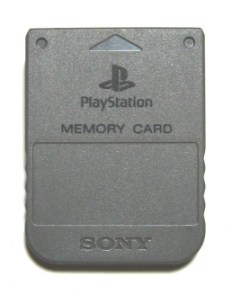
Save systems are given a lot of responsibility in modern game design. In the past, games were shorter and typically offered no save function. Arcade games were tough—they were meant to hand out game overs very liberally—because the objective of arcade operators was only to get players to keep on feeding machines with quarters in order to continue. But, over time, and with advances in technology on consoles, games got longer, and the punishment of having to start over from the beginning of these longer games would just be too cruel to impose on the player. The 1up lost its once-treasured place in game design because these new games didn’t have true game-ending game overs, and so the 1up could no longer really serve the function of protecting the player from punishment.1
Games as Music: The Emotion of Rhythm
by Joel Jordon
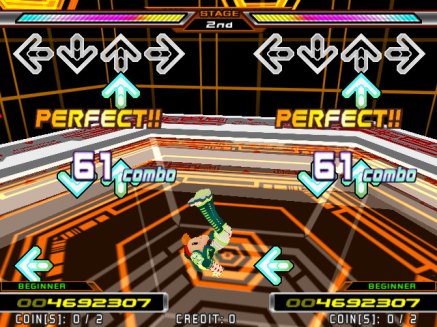
Much has been made recently about how games may be less like narrative mediums like films and books and may more closely resemble music or poetry in form. A certain quality of well-designed games makes the comparison to music feel logical to me, and that quality might be best described as rhythm.1 Games that exhibit this rhythmic quality best do so because player input results in consistent audiovisual feedback at fairly regular intervals. Music might serve as the best metaphor for these games, and this metaphor might help broaden our understanding of games and explain why some games offer more satisfying play experiences than others.
 The Game Manifesto